GenAI & Agentic AI Mastery Program

From zero to a
production-ready AI engineer.

Four months of deep, production-grade engineering, built in the sequence production actually demands. You move through the full stack — Python and AWS foundations; prompt, context and agent engineering; RAG, evaluation and guardrails — culminating in multi-agent architectures with memory, MCP and A2A on AWS. Every project is a real enterprise system you design, build and deploy. Not tutorials. Real systems.

Mentored by Prudhvi Akella · Data & AI Architect · 13+ years · 800+ engineers trained
Program at a glance
Duration4 Months
Modules7 Modules
Real projects2 Projects
CapstoneMulti-agent system
DeploymentProduction · AWS
Alumni800+ Engineers
Full program 30,000
Skills & tools you'll master

A rare Data + AI skillset, end to end.

Twenty-five-plus production skills across the full stack — data and API engineering, the AWS production harness, the RAG stack, agentic architecture and evaluation. The combination that makes you hard to replace.

What you'll achieve

Nine capabilities that define a
production AI engineer.

Program structure

7 modules · 2 projects · 4 months.

A complete production-grade journey. Every module grounded in real enterprise AI engineering — built in sequence, deployed for real.

Click any module to expand its full breakdown

01

Python + Async Engineering

OOP, data structures, asyncio, FastAPI & database connectivity.

The engineering bedrock — modern Python, clean OOP and the async patterns that let an AI backend run tools in parallel without ever blocking a response.

Variables, Functions, OOP

Classes, inheritance, encapsulation and polymorphism.

Data Structures

List, Tuple, Set, Dict and Named Tuple.

Exception + File Handling

Graceful error recovery and robust file I/O.

Database Connectivity

psycopg2 · SQLAlchemy · raw SQL · connection pooling.

FastAPI

High-performance APIs for AI backends.

Async Programming

asyncio fundamentals, the event loop and coroutines.

Parallel Tool Execution

asyncio.gather — run multiple tools simultaneously.

Timeout + Fallback Patterns

asyncio.wait_for — a stuck tool never blocks the system.

Fire-and-Forget Writes

asyncio.create_task — the response is never blocked.

02

AWS Cloud Infrastructure

S3, ECS Fargate, Bedrock, AgentCore, Lambda, RDS & IAM.

The production platform every project deploys to — storage, networking, serverless compute and the managed Bedrock + AgentCore stack that runs agents at scale.

S3Durable object storage — data lakes at scale.
VPC + NetworkingSubnets, routing, security groups, TGW.
ECS FargateServerless containers — run agents without servers.
App Load BalancerDistribute traffic to agent containers.
API GatewayExpose, secure and scale APIs.
AWS BedrockManaged foundation models + agent tools.
AWS AgentCoreProduction agent infrastructure on Bedrock.
LambdaServerless compute for event-driven flows.
RDS PostgreSQLManaged relational DB for agent state.
IAMSecure access control for all resources.
ECRContainer registry for agent images.
03

Prompt Engineering

Anatomy, few-shot, CoT, structured output, RAG grounding, self-refine & Bedrock prompt mgmt.

The six prompt techniques production GenAI systems actually run on — each taught against two worked examples, one healthcare and one e-commerce, so the pattern transfers to any domain. Underneath them, the LLM mechanics that make prompts behave — tokens, context windows, cost; on top, managing prompts as versioned, A/B-tested resources on AWS Bedrock.

Foundations — how an LLM actually works

Prompt → Output

The system / user split, stateless models, and how conversational “memory” is really the full history re-sent on every call.

Tokens & Tokenization

Text → tokens → token IDs → embeddings; ~4 characters per token; why the model only ever sees numbers.

Context Window

The token ceiling per request and the four overflow strategies — truncation, summarisation, sliding window and external memory.

Token Pricing

Input vs output cost (output is always dearer), estimating spend at production scale, cost = tokens × rate.

Model Parameters

Temperature & top-p, max tokens and store — plus the newer effort / verbosity / summary controls. When 0 beats 1, and why.

Prompt vs Context Engineering

Behaviour (how to respond) vs knowledge (what to remember and why) — and where each one becomes the real work.

The six production techniques · healthcare + e-commerce worked examples
01

Prompt Anatomy

The five-section system prompt — Role · Context · Task · Output Format · Examples — and the three runtime tags: <message> (respond to), <input> (process), <context> (ground on).

02

Few-Shot Prompting

2–3 examples in ## Examples that lock in a format instructions cannot describe — chosen to cover the common case, an edge case and a boundary case.

03

Chain-of-Thought

A <thinking> block that forces step-by-step reasoning on multi-condition problems — then stripped before the user ever sees the result.

04

Structured Output

A complete JSON schema with field types and enumerated values; null vs empty-array; a parsing retry so one bad response never breaks the pipeline.

05

RAG Grounding

Four rules that force answers from your <context> only — inline [Doc N] citations, an exact fallback phrase, and never filling gaps from general knowledge.

06

Self-Refine

Generate → critique → improve in a single call, with PASS/FAIL criteria so the model fixes only what failed and preserves what already passed.

Advanced techniques — and what production uses instead

Tree of Thought

Explore branches, evaluate, backtrack. 5–10× the cost — production reaches for a well-structured CoT instead.

Self-Consistency

Sample several reasoning paths, take the majority vote. 5× the cost and fragile to systematic bias — CoT plus human review wins.

Least-to-Most

Ordered sub-problem decomposition. Genuinely an agent pattern — you build it as a planner agent in Module 06.

You learn these honestly — what each one is, where it works, and why a production system reaches for a cheaper tool. That judgment is what separates an engineer from someone who merely got it working.
Prompts as production resources · AWS Bedrock

Bedrock Prompt Management

Store, version & deploy prompts, prompt variables, A/B tests and prompt flows — prompts treated as versioned assets, not strings buried in code.

Universal Prompt Checklist

The pre-flight every system prompt passes — specific role, defined terms, explicit MUST / MUST NOT, a pasted schema and the right runtime tag.

04

Distributed Ingestion Pipeline + RAG Evaluation

Docling, semantic chunking, embeddings & RAG evaluation frameworks.

Turn messy enterprise documents into high-quality retrieval — then prove your RAG actually works with rigorous evaluation. You cannot improve what you do not measure.

Distributed ingestion pipeline · AWS
01

Layout Identification

Docling detects headers, paragraphs, images, tables, code blocks and formulas.

02

Data Extraction

Serialize to structured objects → Markdown with boundary markers.

03

Semantic Chunking

Group by structure — fixed-width chunking fails on complex layouts.

04

Enrich Chunks

PII detection + redaction, NER entities and key phrases for hybrid search.

05

Generate Embeddings

Titan Multimodal · SentenceTransformer · OpenAI — a unique ID per chunk.

06

Load Vectors

Pinecone · S3 Vector Buckets · OpenSearch with HNSW / IVF indexes.

Runs distributed: ECS Fargate workers · DynamoDB state tracking · Neo4j graph relationships.
RAG evaluation frameworks

RAG Triad (LLM-based)

Faithfulness, context relevance and answer relevance.

Retrieval Quality (deterministic)

Precision@k, Recall@k, F1, Hit Rate@k, MRR + NDCG@k.

MLflow + LangSmith

Log custom metrics, trace every LLM call, compare runs, monitor production.

Golden Dataset + Regression

Expected chunks & answers; regression-test every change to prevent hallucination regressions.

05

Guardrails — Three-Layer Safety Architecture

Input, output and action guardrails. Safety as architecture.

Safety is architecture, not an afterthought. LLMs hallucinate confidently — three independent layers catch what any single layer would miss.

01

Input Guardrails

Gateway · pure functions · under 1ms
  • Prompt-injection detection via regex patterns
  • PII in the question — redact or reject
  • Out-of-domain — reject with a message
  • Toxic content — reject immediately
  • Deterministic, never an LLM
  • Agent is never called on failure
02

Output Guardrails

Evaluator · class with LLM client
  • Faithfulness check — LLM judge
  • Medical / legal safety — code first
  • Contradiction check catches confident-wrong
  • Low confidence — add a disclaimer
  • Hard fail → safe fallback response
  • Never sends an unsafe answer
03

Action Guardrails

Agent · pure functions
  • Max 3 retries per tool call
  • Max 5 total tool calls per request
  • Query validation before execution
  • Read-only DB queries enforced
  • Charts only with 3+ data points
  • Vector search capped at top_k = 10
Also covered — AWS Bedrock Guardrails: contextual grounding, automated reasoning checks, harmful-content filtering and topic blocking.
06

Agentic AI + Memory Architecture

LangChain agents, the middleware stack, semantic cache & episodic memory.

Build real agents — tools, a layered middleware stack and a memory system with semantic caching, episodic recall and context compression.

LangChain agents

Agent Foundations

create_agent (model + tools + middleware + store); @tool(parse_docstring); parallel tool execution via asyncio.gather.

Tool Design

Each tool owns its logic + fallback; action guardrails inside tools; a retrieval sanitiser strips injection from results.

Human in the Loop

HumanInTheLoopMiddleware pauses before sensitive tools; resume via checkpointer + InMemorySaver.

Context Engineering

@dynamic_prompt with SYSTEM / CONTEXT / USER separation and a token budget per section.

Agent middleware stack

1 · Tracer

Cross-cutting observability.

2 · Domain PII

Redact email, mask CC on input + output.

3 · Content Filter

Toxic + out-of-domain (domain-specific).

4 · Semantic Cache

A hit skips everything downstream.

5 · Episodic Memory

Enrich context from past answers.

6 · Summarization

Compress when over 3000 tokens.

7 · Action Guardrail

Max 5 tool calls; read-only DB.

8 · Output Guardrail

Regex → faithfulness judge → contradiction check.

Memory architecture + protocols

Semantic Cache

FAISS IndexFlatIP, sub-millisecond; domain-specific = 0.97, general = 0.88; hit jumps to end; fire-and-forget write.

Episodic Memory

InMemoryStore; the LLM tags answers EPISODIC yes/no; a hit enriches CONTEXT only.

Context Compression

Trigger over 3000 tokens; keep the last 10 messages; summarise the oldest.

MCP · A2A · Multi-Agent

Model Context Protocol, Agent-to-Agent protocol and supervisor + specialised agent systems.

07

Context Engineering

What goes into context, token budgets, compression & recency.

Everything the LLM sees is a design decision. Deliberately control every token — what goes in, in what order, and within what budget.

What goes into context

The five inputs

System prompt · session history (last N turns) · episodic memory hits · retrieved RAG chunks · the user question.

Why it matters

Bad context = bad answers. Too little → hallucination; too much → cost + confusion; order matters (recency bias).

How to engineer it

Design principles

SYSTEM / CONTEXT / USER separation; ~2000-token budget per section; truncate oldest history first; structural separation as a safety defence.

Agent context patterns

The context window as working memory; tool results injected mid-context; dynamic injection from the memory store; compression for long tasks.

Two production-grade projects

Real enterprise data.
Real deployment.

You don't finish with notebooks — you finish with two deployed systems on AWS and a portfolio that survives an L6 system-design interview.

Multi-Agent Analytics

vs-NLQ — Multi-Agent Intelligence Platform

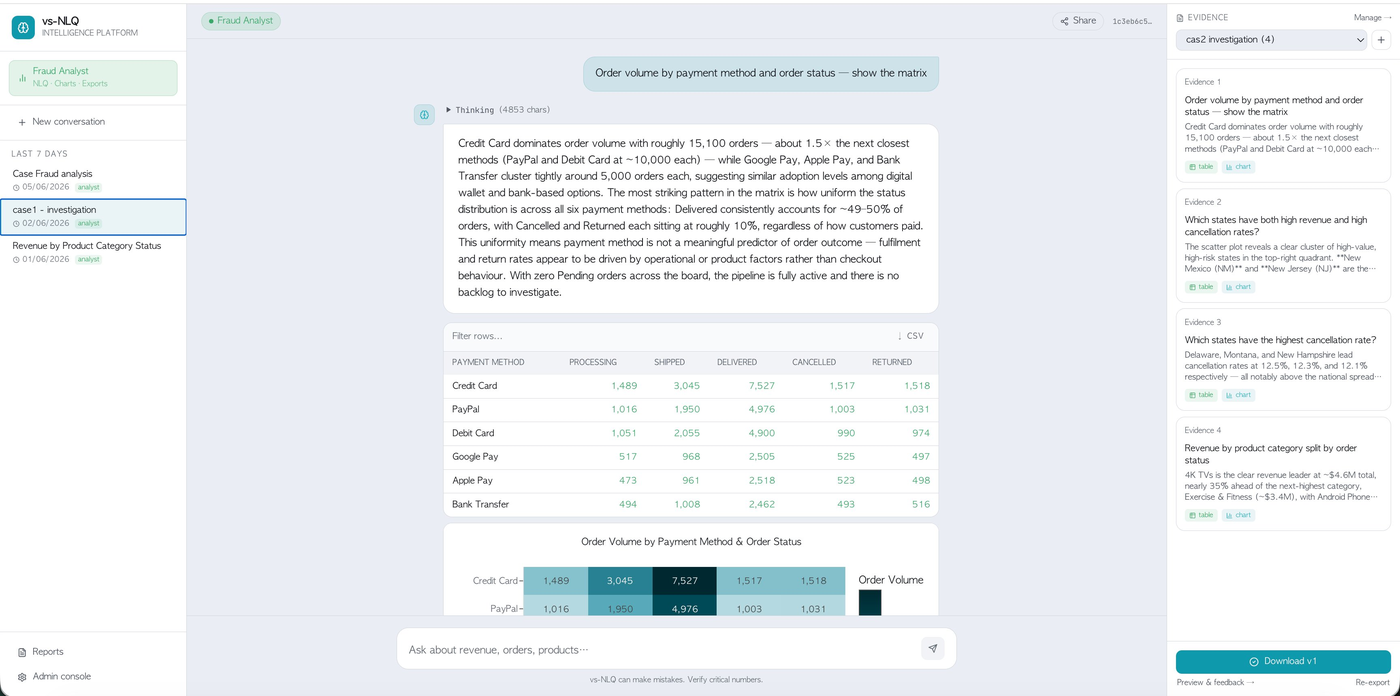
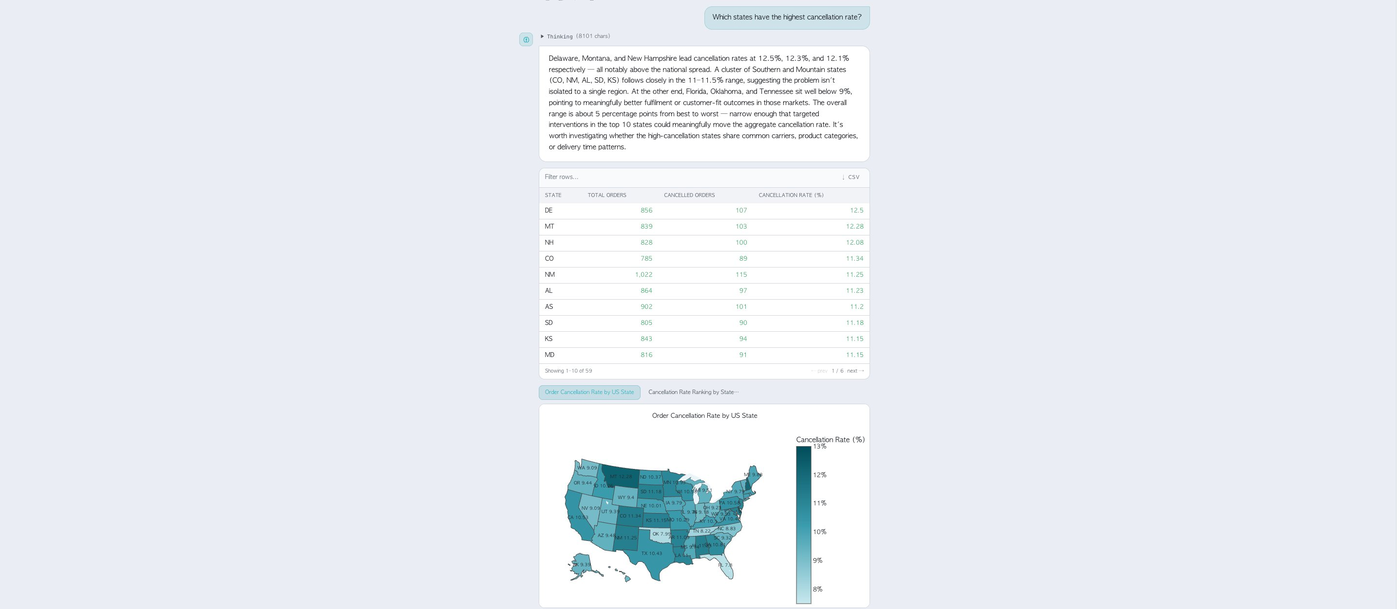
E-commerce & fraud analytics — ask in plain English, get tables, charts, maps and exportable investigation reports.
  • Natural language → SQL & Cypher over real e-commerce data
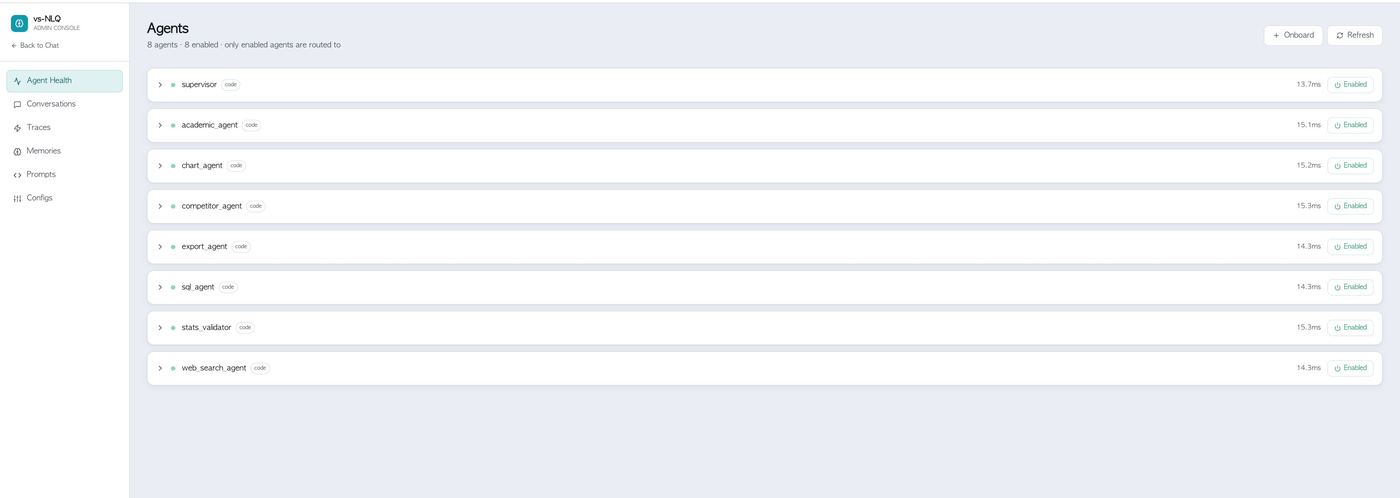
  • Supervisor routing across 8 specialist agents — SQL, chart, stats validator, competitor, academic, web search and export
  • Input / output / action guardrails with semantic & procedural memory
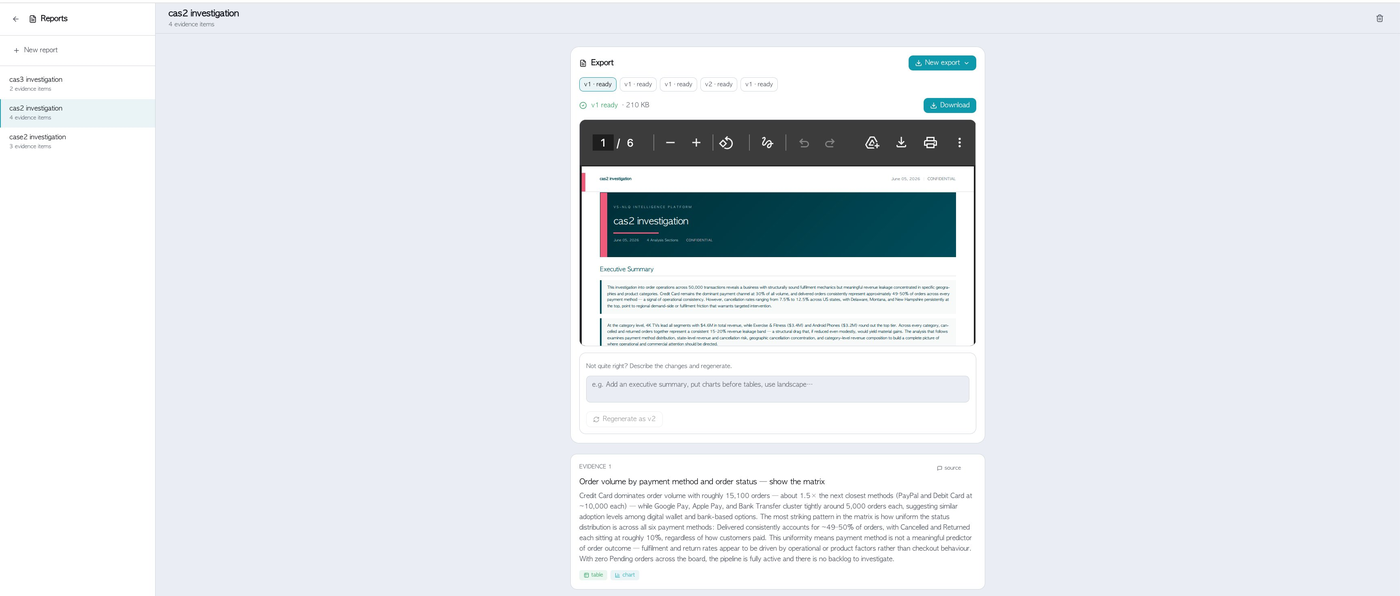
  • Evidence collection → auto-generated, versioned PDF reports
  • Full observability — traces, memories, prompts and agent health in an admin console
LangGraphAWS AgentCoreBedrockLangSmithRDS PostgreSQLDynamoDBNeo4jFastAPIReact
RAG + Retrieval

Distributed Ingestion + Hybrid Retrieval Engine

Unstructured enterprise documents — ingestion, hybrid vector + graph retrieval, and answers you can actually trust.
  • PDF → layout identification → semantic chunks via Docling
  • Chunk enrichment — PII redaction, NER entities and key phrases
  • Embeddings loaded to Pinecone + a Neo4j knowledge graph for hybrid, multi-hop retrieval
  • Distributed async ingestion workers on ECS Fargate with DynamoDB state tracking
  • RAG evaluation — RAG Triad, Precision@k / Recall / F1, golden datasets and regression testing
  • Evidence-backed answers grounded in your private documents
DoclingPineconeNeo4j + CypherS3 VectorsECS FargateDynamoDBMLflowBedrock
Prudhvi Akella, Data & AI Architect
13+ yrs
Enterprise AI
Your instructor

Prudhvi Akella

Data & AI Architect
  • Built production RAG + Agentic AI systems for global enterprise clients
  • Architected multi-agent platforms on AWS Bedrock + AgentCore
  • Expert in LangChain · LangGraph · MCP · A2A · LLMOps
  • Designed distributed data pipelines processing millions of records at enterprise scale
"Every project in this course is based on real, production-grade AI systems I have built for global enterprises. Not tutorials. Real systems."
13+
Years experience
800+
Engineers trained
Who it's for

Built for engineers who want
to ship, not just to learn.

This is for you if

  • You're a software or backend engineer moving into AI
  • You're a data engineer or scientist building GenAI systems
  • You're an ML practitioner who wants production, not notebooks
  • You're targeting AI architect / L6-level system-design roles

What you'll need

  • Comfort writing basic Python (we build the rest from the ground up)
  • Familiarity with APIs & databases — helpful, not required
  • An AWS account (free tier) for hands-on labs
  • Around 6–8 focused hours a week for the projects
Enroll

One program. Everything you need to go production-ready.

Four months of mentored, production-grade GenAI engineering — with two deployed projects you can put your name on.

  • 7 in-depth modules
  • 2 real enterprise projects
  • Production deployment on AWS
  • Direct mentorship from Prudhvi
  • L6-level system design
  • Job-ready portfolio
Full program
30,000
4 months · 7 modules · 2 projects
Apply now
Takes 30 seconds · confirm your seat on WhatsApp
Questions

Frequently asked.

Next cohort

Become the engineer who ships
real GenAI systems.

Join 800+ engineers who've trained with VidyaSankalp. Four months from now, you could be deploying agentic AI to production.